Home / Internships & first job
Working while you study: hour limits in the UK, Canada and Australia
How many hours a student visa lets you work in the UK, Canada and Australia: term-time limits, breaks, how each country counts a week, and what counts as work.

Student visas in the UK, Canada and Australia all let you work part-time, but each country sets its own limit and counts it its own way. The UK counts hours per week, Canada per week, and Australia per fortnight. All three relax the limit during official breaks.
The numbers matter less than the details behind them: which week, which break, and which kinds of work count. This guide sets out the rule in each country from the government page that sets it. Studying in the United States? The F-1 rules are different; see our guide to whether international students can work in the USA and the official F-1 work rules on Study in the States (opens in a new tab).
The limits at a glance
| United Kingdom | Canada | Australia | |
|---|---|---|---|
| Limit in term | 20 hours a week (degree level) | 24 hours a week off campus | 48 hours a fortnight |
| How the period is counted | A week starts on Monday | Not stated on the pages we read | A fortnight is 14 days starting on a Monday |
| In official breaks | Full-time | Unlimited | Unlimited |
| On-campus work | Same limit | No limit | Same limit |
| Source | gov.uk (opens in a new tab) | canada.ca (opens in a new tab) | homeaffairs.gov.au (opens in a new tab) |
All rules checked 18 Oct 2026. On a phone, scroll the table sideways. The limit that applies to you is the one printed on your own visa or permit, so read that first.
United Kingdom
On a Student visa, your work limit depends on your course and your sponsor. Appendix Student of the Immigration Rules sets three cases (ST 26.1 (opens in a new tab), checked 18 Oct 2026):
- 20 hours a week in term-time for a full-time course at degree level or above with a higher education provider that has a track record of compliance.
- 10 hours a week in term-time for a full-time course below degree level with such a provider.
- No work for all other study, including all part-time study.
In the first two cases you may work full-time outside term-time. The Immigration Rules define a week as “a period of 7 days beginning with a Monday” (Immigration Rules: introduction (opens in a new tab), checked 18 Oct 2026). So you cannot average hours over two weeks: each Monday-to-Sunday week must stay within the limit. Appendix Student does not define term-time. Your university publishes its own term and vacation dates, so ask its visa team which dates it uses.
Fig. 1 UK Student visa: hours a week in term Source: Appendix Student, gov.uk, checked 18 Oct 2026 (opens in a new tab)
What you cannot do in the UK
Some work is barred whatever the hours. Under ST 26.5 (opens in a new tab) (checked 18 Oct 2026), a Student may not:
- be self-employed or run a business;
- work as a professional sportsperson, including as a sports coach;
- work as an entertainer;
- take a job that fills a permanent full-time vacancy.
There are narrow exceptions. A work placement that is an integral, assessed part of your course is allowed. At degree level with a higher education provider that has a track record of compliance, a placement may be up to half of the course length (ST 17.3 (opens in a new tab)). An elected student union sabbatical officer may work for up to 2 years. And a permanent full-time job may start early in two cases: up to 3 months before the course ends, if you have applied for a Skilled Worker visa, or once you have completed your course, if you have applied for a Graduate visa (ST 26.6).
Canada
In Canada, you need a study permit that carries a work condition, and you must have started your programme. You cannot work before your studies begin. Off campus, you can work without a separate work permit if you meet all of these conditions (canada.ca, Work off campus (opens in a new tab), checked 18 Oct 2026):
- you are a full-time student at a designated learning institution (DLI);
- you are in a post-secondary academic, vocational or professional programme, or a secondary-level vocational programme in Quebec;
- the programme is at least 6 months long and leads to a degree, diploma or certificate;
- your study permit is valid, or you applied to extend it before it expired;
- you have a social insurance number (SIN).
During regular terms you can work up to 24 hours a week off campus. Your permit may still say 20 hours: Immigration, Refugees and Citizenship Canada (IRCC) says you may work 24 as long as you stay eligible. You can hold more than one job, as long as the total stays within 24. You keep track of your own hours, and IRCC counts any time you spend earning wages or a commission.
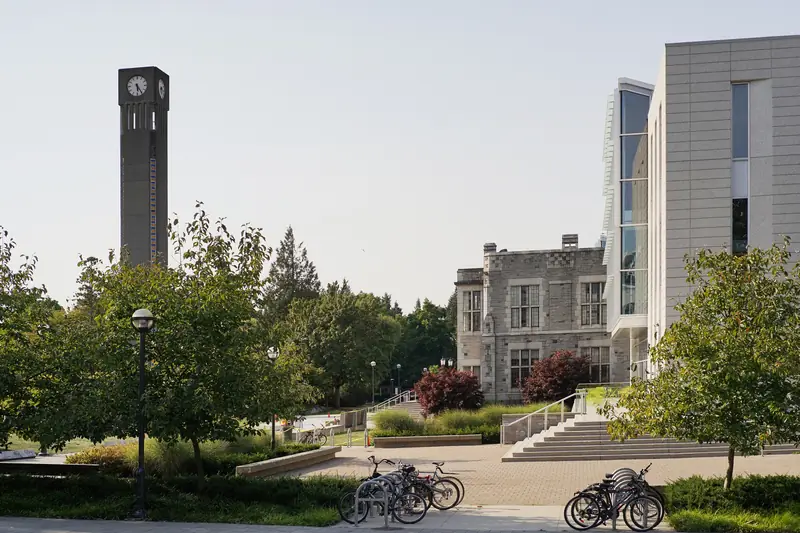
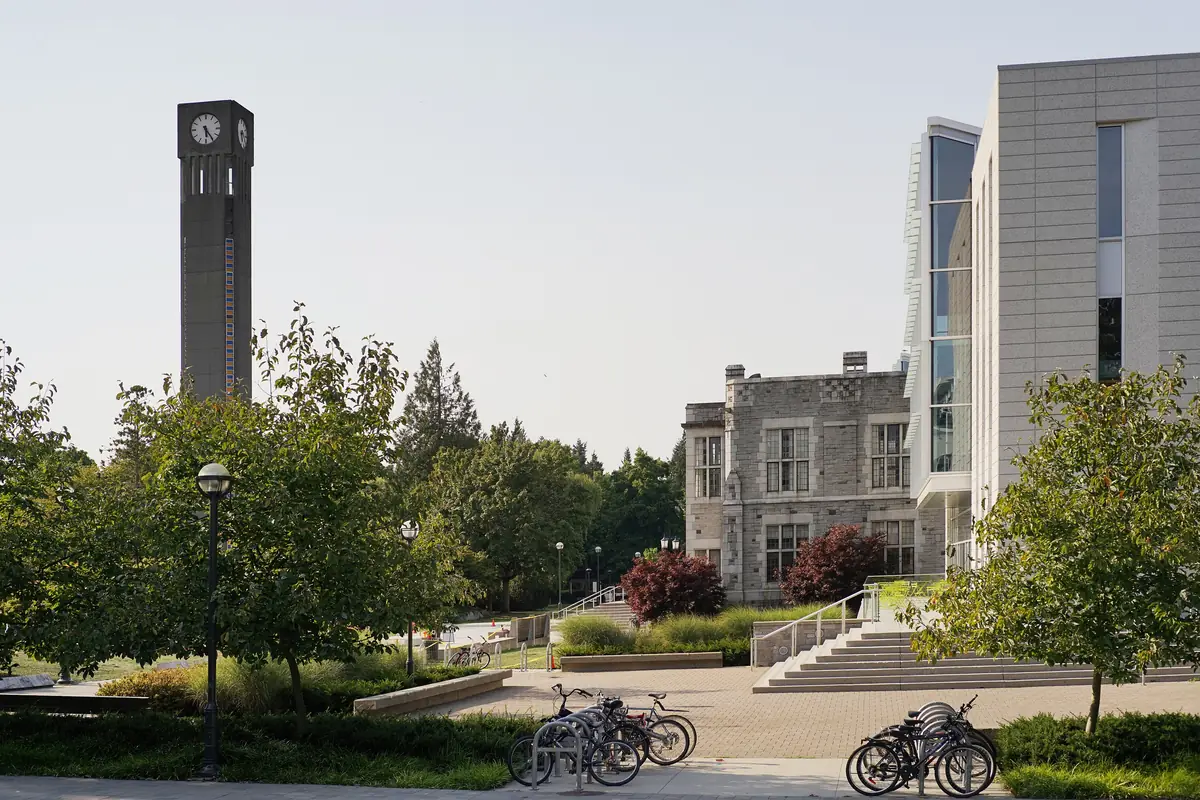
Fig. 2 The University of British Columbia campus in Vancouver Photo: Dllu, Wikimedia Commons (opens in a new tab), CC BY-SA 4.0 (opens in a new tab), cropped to 3:2, resized, converted to WebP.
Scheduled breaks in Canada
During a break that your school schedules, such as summer or winter holidays or a reading week, you can work unlimited hours off campus. The IRCC help centre sets the limits of that rule (IRCC Help Centre (opens in a new tab), checked 18 Oct 2026):
- A break must be scheduled by your school and last at least 7 consecutive days.
- A statutory holiday on its own is not a break, even if it makes a long weekend.
- If back-to-back breaks run longer than 150 consecutive days, you can work only during the first 150.
- Across all breaks, you can work unlimited hours off campus for at most 180 days in a calendar year.
Fig. 3 Canada: when off-campus hours are unlimited Source: IRCC Help Centre, checked 18 Oct 2026 (opens in a new tab)
Work on campus and placements in Canada
On campus there is no hour limit, in term or in breaks, as long as you are eligible. “On campus” means the buildings of the campus where you study. Your employer can be the school, a faculty member, a student organisation, or yourself if you run a business on campus (canada.ca, Work on campus (opens in a new tab), checked 18 Oct 2026).
Co-op placements and internships follow their own rule. Since 1 April 2026, post-secondary students no longer need a co-op work permit for a placement. The placement must be required by your programme, confirmed by your DLI, and no more than 50% of the programme. There is no weekly hour limit for it (canada.ca, Student work placements (opens in a new tab), checked 18 Oct 2026).
Two more points from IRCC’s off-campus page. Remote work for an employer outside Canada does not count toward the 24 hours, as long as you meet your permit conditions. Unpaid work also counts as work if the job would usually be paid, or if it would be valuable work experience for a Canadian, such as an unpaid internship.
Australia
On a Student visa (subclass 500), the work limit is condition 8105. You cannot work before your course starts, unless you held another visa that allowed work when you applied. Once it has started, you can work up to 48 hours a fortnight while your course is in session, and unlimited hours when it is not (Home Affairs, Student visa (opens in a new tab), checked 18 Oct 2026).
Home Affairs explains the condition on its visa conditions page (opens in a new tab) (checked 18 Oct 2026):
- In session means the school semesters, including exam periods. It also covers a term break in which you take another course that counts toward your main course.
- Not in session means scheduled course breaks, a deferral or suspension under the National Code, or the time after you have completed your course while your visa is still valid.
- A fortnight is a period of 14 days starting on a Monday.
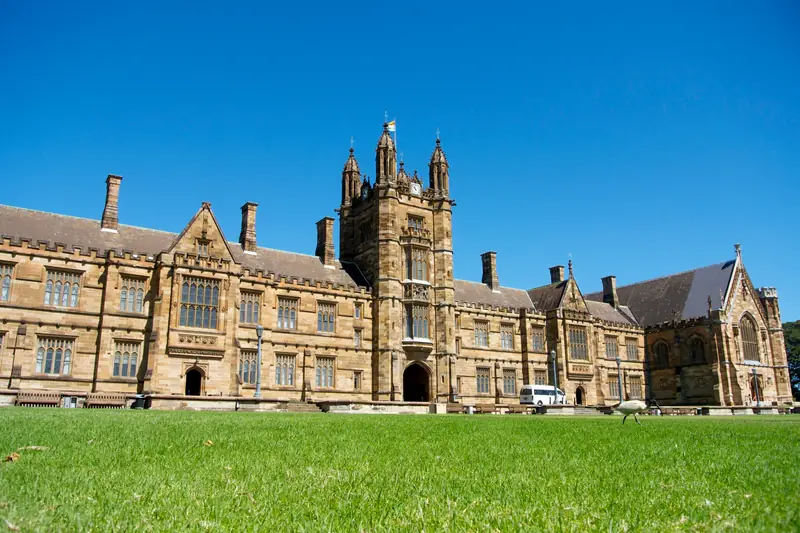
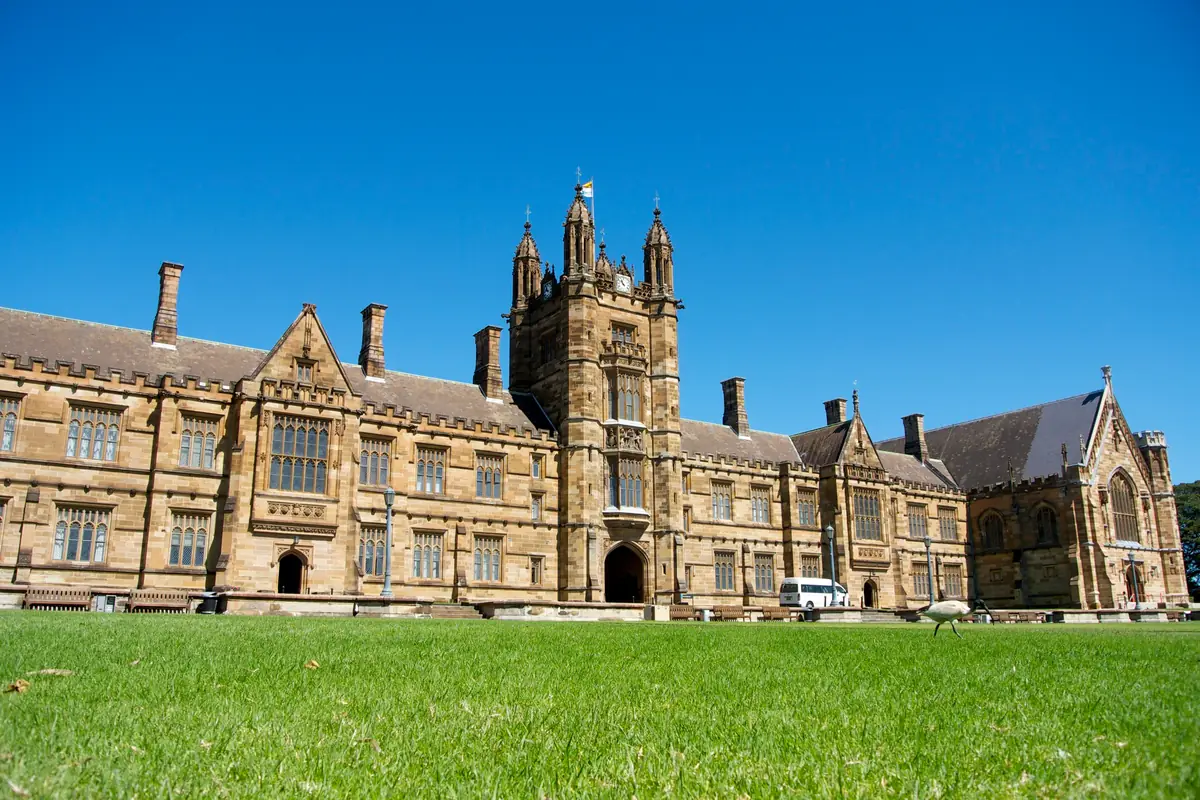
Fig. 4 The University of Sydney's Main Quadrangle Photo: Jason Tong, Wikimedia Commons (opens in a new tab), CC BY-SA 3.0 (opens in a new tab), cropped to 3:2, resized, converted to WebP.
How the fortnight is counted
The fortnight is not a fixed pay period. Home Affairs gives this example. A student works 15, 30, 30 and 10 hours in four weeks. Weeks 1 and 2 total 45 hours, and weeks 3 and 4 total 40, so both pairs pass. But weeks 2 and 3 total 60 hours, and if the course is in session, the student is in breach for that fortnight.
Fig. 5 Australia: the 48-hour fortnight test Source: Home Affairs, checked 18 Oct 2026 (opens in a new tab)
What counts as work in Australia
Home Affairs treats you as working when you have attended a workplace under a roster or timesheet (but not during unpaid breaks), when you are clocked on to a system that records work, or when a payslip shows pay for the time. You can hold more than one job, but the total across all jobs must stay within 48 hours a fortnight.
Work experience counts toward the 48 hours whether it is paid or unpaid. The exception is a work placement that is a mandatory part of your course and is registered as such on the Commonwealth Register of Institutions and Courses for Overseas Students (CRICOS). Placement time beyond what the course registration requires still counts.
Who has no limit in Australia
Students on a Student visa for a master’s degree by research or a doctorate can work more than 48 hours a fortnight once that degree has started. Family members on the visa can work up to 48 hours a fortnight while the course is in session. If the student is doing a master’s by research, a doctorate, a master’s by coursework or a master’s (Extended), the family members can work more (Home Affairs (opens in a new tab), checked 18 Oct 2026). From 2 October 2026, most new Student visa applicants can no longer include family members in their application; Home Affairs lists the exemptions (Home Affairs (opens in a new tab), checked 18 Oct 2026). Home Affairs also points workers to the Fair Work Ombudsman for pay rates and rights at work (visa conditions, 8105 (opens in a new tab), checked 18 Oct 2026).
Questions students ask
Can I work 40 hours a week on a student visa? In a scheduled break, yes, in all three countries. In term, no: the UK caps degree-level students at 20 hours each week, Canada at 24 hours off campus, and Australia at 48 hours in any Monday-start fortnight.
Does unpaid work or volunteering count? In Canada, unpaid work counts if it is a job that would usually be paid or valuable work experience. In Australia, unpaid work experience counts unless it is a registered mandatory placement. In the UK, the pages we read do not cover volunteering directly, so ask your university’s visa team.
What happens if I work more than allowed? IRCC says working more than 24 hours a week in term breaks your permit conditions. You can lose your student status, may be refused future permits, and may have to leave Canada. In Australia, working over the limit in session is a breach of condition 8105. The UK pages we read do not set out the consequence, but the hours are a condition of your permission.
Before you act
This guide is general information, not immigration advice. The conditions printed on your own visa or permit are what apply to you. If your case is not simple, use a regulated adviser: in the UK, an adviser regulated by the Immigration Advice Authority (IAA) or a solicitor; in Canada, a licensed consultant (RCIC) or a lawyer; in Australia, a registered migration agent. Our disclaimer explains how to check an adviser.
Sources
All checked on 18 October 2026.
- gov.uk, Immigration Rules: Appendix Student (opens in a new tab), ST 17, ST 26.
- gov.uk, Immigration Rules: introduction (opens in a new tab), definition of “week”.
- IRCC, Work off campus as an international student (opens in a new tab), modified 15 April 2026.
- IRCC Help Centre, Working during scheduled breaks (opens in a new tab), modified 28 September 2026.
- IRCC, Work on campus as an international student (opens in a new tab), modified 1 May 2026.
- IRCC, Work in a student work placement (opens in a new tab), modified 1 May 2026.
- Department of Home Affairs, Student visa (subclass 500) (opens in a new tab), updated 12 October 2026.
- Department of Home Affairs, See your visa conditions: 8105 Work limitation (opens in a new tab).
General information, not legal, immigration or financial advice. Rules change. Confirm every requirement on the official page, and talk to a licensed adviser if your case is not simple. Disclaimer