UK Graduate Route: who qualifies, how long it lasts and what it costs
The UK Graduate visa from gov.uk: who can apply, the 2-year and 18-month rule, the fee and health surcharge, what you can do on it, and the next step.

On this page
The Graduate visa, often called the Graduate Route, lets international students stay in the UK and work after they complete an eligible course. gov.uk describes it as permission to stay “for at least 18 months after successfully completing an eligible course in the UK” (gov.uk, Graduate visa (opens in a new tab), checked 18 Oct 2026). You do not need a job offer, and you can work in most jobs.
The length is changing. If you apply on or before 31 December 2026, the visa lasts 2 years. If you apply on or after 1 January 2027, it lasts 18 months. A PhD or other doctoral qualification gives 3 years. This guide sets out the rules from gov.uk, the cost, the application steps, and what usually comes next.
Who can apply
You can apply if all of these are true (gov.uk, checked 18 Oct 2026):
- you are in the UK;
- your current visa is a Student visa or a Tier 4 (General) student visa;
- you studied a UK bachelor’s degree, postgraduate degree or other eligible course for the minimum time on that visa;
- your education provider has told the Home Office that you have successfully completed your course.
You must apply from inside the UK, and before your Student visa expires. You do not have to wait until you have graduated or received a certificate. You can apply once your university or college has reported your completion to the Home Office.
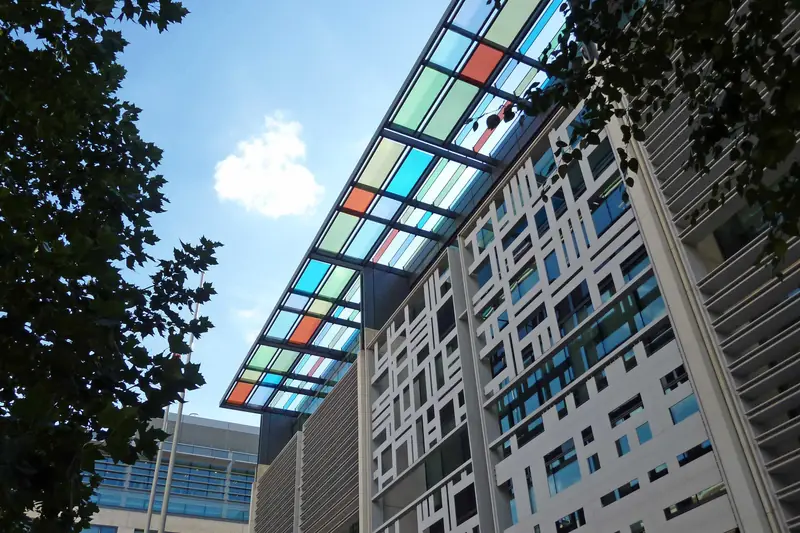
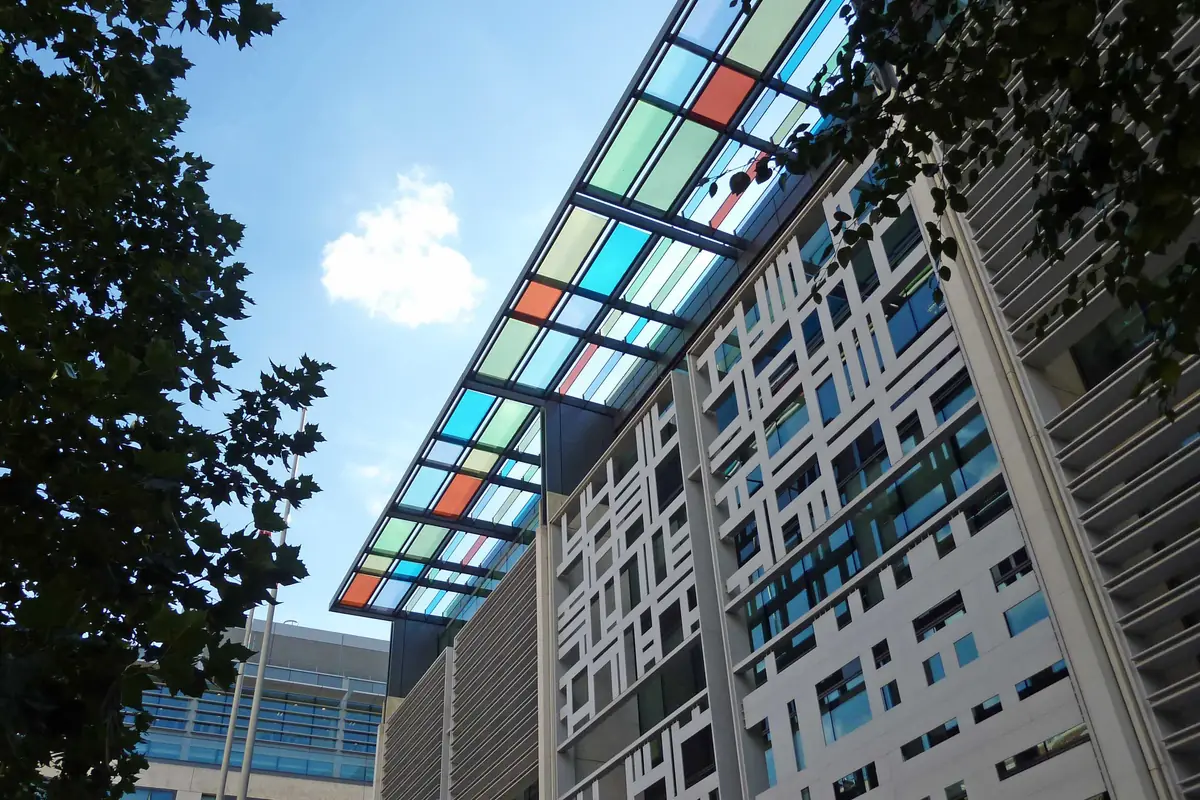
Fig. 1 The Home Office at 2 Marsham Street, London Photo: Steph Gray, Wikimedia Commons (opens in a new tab), CC BY-SA 2.0 (opens in a new tab), cropped to 3:2, resized, converted to WebP.
Eligible courses and providers
Your provider must be a licensed student sponsor with a “track record of compliance”. The register of sponsors shows this as “Student Sponsor - Track Record” in the Status column (gov.uk, The course you studied (opens in a new tab), checked 18 Oct 2026).
You usually need a UK bachelor’s degree, master’s degree, or PhD or other doctorate. gov.uk also lists some professional courses, including:
- a law conversion course approved by the Solicitors Regulation Authority;
- the Legal Practice Course, the Solicitors Course or a Diploma in Professional Legal Practice;
- the Bar Practice Course or the Bar Course;
- a Postgraduate Certificate in Education (PGCE) or Postgraduate Diploma in Education (PGDE).
How long you must have studied in the UK
If your course was longer than 12 months, you need to have studied in the UK for at least 12 months. If it was 12 months or shorter, you need to have studied in the UK for the whole course. “Studying in the UK” means being in the UK when your provider needed you there, for lectures or meetings with a tutor. gov.uk gives an example: on a 1-year master’s, leaving the UK in term breaks or at weekends still counts as a year in the UK.
How long the Graduate visa lasts
| When you apply | Length |
|---|---|
| On or before 31 December 2026 | 2 years |
| On or after 1 January 2027 | 18 months |
| PhD or other doctoral qualification | 3 years |
The visa starts on the day your application is approved, not on the day you apply or graduate (gov.uk, checked 18 Oct 2026). You cannot extend a Graduate visa. To stay longer, you need to switch to another visa, such as a Skilled Worker visa.
Fig. 2 From course completion to Graduate visa Source: gov.uk, checked 18 Oct 2026 (opens in a new tab)
What it costs
When you apply, you pay two things (gov.uk, How much it costs (opens in a new tab), checked 18 Oct 2026):
- the application fee: £937;
- the Immigration Health Surcharge, usually £1,035 for each year of the visa.
gov.uk gives the surcharge for each length: £1,152.50 for 18 months, £2,070 for 2 years and £3,105 for 3 years. Adding the fee gives the total for one applicant. You are told the exact amount when you apply. Your partner and children pay separately if they apply as dependants.
Fig. 3 Graduate visa cost for one person Source: gov.uk, checked 18 Oct 2026 (opens in a new tab)
If you work in public sector healthcare, gov.uk suggests you check the Health and Care Worker visa instead. It is cheaper and has no annual health surcharge.
How to apply
You apply online. You will need your passport and the Confirmation of Acceptance for Studies (CAS) reference number from your Student visa application. Your provider can tell you the number if you cannot find it (gov.uk, Documents (opens in a new tab), checked 18 Oct 2026). If a scholarship or sponsorship provider paid both your course fees and living costs in the last 12 months, you may need a letter from it approving your application.
You prove your identity in one of two ways, and the form tells you which (gov.uk, Apply (opens in a new tab), checked 18 Oct 2026):
- scan your identity document with the “UK Immigration: ID Check” app; or
- give your fingerprints and photo at a UK Visa and Citizenship Application Services (UKVCAS) service point.
Do not travel outside the UK, Ireland, the Channel Islands or the Isle of Man until you get a decision. gov.uk says your application will be withdrawn if you do. You usually get a decision within 8 weeks, and you can stay in the UK while you wait. If you are successful, you get an eVisa, a digital record of your status, which you see through a UK Visas and Immigration (UKVI) account.
After you apply
gov.uk says UKVI will contact you if your application will take longer than usual, for example because your documents need to be checked, or because of your personal circumstances, such as a criminal conviction. You can ask to cancel an application. You get the fee back only if UKVI has not started processing it (gov.uk, Apply (opens in a new tab), checked 18 Oct 2026).
To prove that you hold a valid Student visa, you may still have a biometric residence permit (BRP). gov.uk says you can use a BRP for 24 months after the expiry date printed on it, or until 31 December 2026, whichever comes first. gov.uk also offers help with the online form if you are not confident using a computer or have no internet access. That service cannot give immigration advice.
Starting work before the decision
Appendix Student lets a Student take a permanent full-time job once they have completed their course, if they have applied for a Graduate visa while on Student permission and the decision is pending. Their course must be a full-time course at degree level or above with a higher education provider that has a track record of compliance (Appendix Student, ST 26.6 (opens in a new tab), checked 18 Oct 2026).
What you can and cannot do
With a Graduate visa you can (gov.uk, checked 18 Oct 2026):
- work in most jobs;
- look for work;
- be self-employed;
- do unpaid voluntary work for a registered charity, a voluntary organisation, an associated fundraising body or a statutory body;
- live in the UK with your partner and children, if they are eligible;
- travel abroad and return.
You cannot claim most benefits (public funds) or the State Pension, and you cannot work as a professional sportsperson. You can study only on a course that is not eligible for a Student visa.
Partner and children
Your partner and children can stay as your dependants if they were already your dependants on your Student visa. A child born in the UK during your stay can also apply. Their visa ends on the same date as yours (gov.uk, Your partner and children (opens in a new tab), checked 18 Oct 2026).
After the Graduate visa
Because you cannot extend it, plan the next step early. For most graduates who want to stay in work, that is a Skilled Worker visa, which needs a job offer from a Home Office-approved employer in an eligible occupation (gov.uk, Skilled Worker visa: your job (opens in a new tab), checked 18 Oct 2026). Key salary points:
- The usual minimum is £41,700 a year or the going rate for the job, whichever is higher.
- If you are on a Graduate visa, or were in the last 2 years and a Graduate or visit visa was your most recent visa, you can be paid 70% of the job’s standard going rate, as long as the salary is at least £33,400 a year.
- With that discount, your total stay cannot be more than 4 years, and time on the Graduate visa counts toward it.
Fig. 4 Skilled Worker salary floors after a Graduate visa Source: gov.uk, checked 18 Oct 2026 (opens in a new tab)
Whether a job is eligible depends on its four-digit occupation code. For one example, see how the code works for data analysts.
Questions students ask
Can a Graduate visa be extended? No. gov.uk says you cannot extend it, but you may be able to switch to another visa.
Do I need a job offer to apply? No. A job offer is not one of the eligibility conditions.
Can I work full-time on a Graduate visa? gov.uk says you can work in most jobs and lists no weekly hour limit. You cannot work as a professional sportsperson.
What changes in 2027? For applications made on or after 1 January 2027, the visa lasts 18 months instead of 2 years. gov.uk lists 3 years for doctoral graduates, with no change date.
Does the Graduate visa count toward settlement? That is a question about your own route to permanent residence, which this guide does not cover. Ask a regulated immigration adviser.
Before you act
This guide is general information, not immigration advice. Rules and fees change, so check gov.uk on the day you apply. If your case is not simple, use an adviser regulated by the Immigration Advice Authority (IAA), or a solicitor. Our disclaimer explains how to check one.
Sources
All checked on 18 October 2026.
- gov.uk, Graduate visa (opens in a new tab): Overview, The course you studied, How much it costs, Documents you’ll need to apply, Apply, Your partner and children.
- gov.uk, Immigration Rules: Appendix Student (opens in a new tab), ST 26.6.
- gov.uk, Skilled Worker visa: your job (opens in a new tab) and when you can be paid less (opens in a new tab).
General information, not legal, immigration or financial advice. Rules change. Confirm every requirement on the official page, and talk to a licensed adviser if your case is not simple. Disclaimer