Proof of funds for a student visa: US, UK, Canada and Australia compared
How much money the UK, Canada, the US and Australia ask you to show for a student visa, which documents count, and the government page behind each rule.

On this page
Every student visa asks the same question: can you pay for your course and live while you study? Each country answers it with its own amount, its own list of documents, and its own rule on how long the money must sit in your account.
This guide puts the four answers side by side. Each row links to the government page that sets the rule. The UK and Canada rules were checked on 18 October 2026. Two of them change around now: Canada raised its amount on 1 September 2026, and the UK raises its amounts on 30 November 2026. Check the official page on the day you apply.
The four rules side by side
| Country | What you must show | Documents that count | Source |
|---|---|---|---|
| United States | Documentary evidence of funds in the amount shown on your Form I-20. | If the consular officer asks: evidence of how you will pay all educational, living and travel costs. | travel.state.gov (opens in a new tab) |
| United Kingdom | £1,529 a month in London, or £1,171 a month outside London, for up to 9 months, plus any course fees you have not paid. From 30 November 2026: £1,570 and £1,203. | Bank statements that show the money held for 28 days in a row, ending within 31 days of the date you apply; or evidence of a student loan or official sponsorship. | gov.uk (opens in a new tab) |
| Canada | First-year tuition, return transport, and CAD 23,448 a year for living costs for one person, for applications on or after 1 September 2026 (CAD 22,895 before). Quebec sets its own amount. | Bank statements for the past 6 months, a GIC, a student loan, a scholarship letter, a sponsor’s letter, or a receipt for tuition paid. | canada.ca (opens in a new tab) |
| Australia | Travel, 12 months of course fees, and AUD 29,710 for 12 months of living costs. | Deposits with a financial institution, a loan, a scholarship, or a parent’s or partner’s annual income of at least AUD 87,856. | homeaffairs.gov.au (opens in a new tab) |
On a phone, scroll the table sideways. Amounts are for one student with no dependants. The Canadian amount does not include tuition or transport.
If your case is not simple, talk to a licensed or registered immigration adviser.
Three questions behind every rule
The four countries word their rules differently, but each rule answers the same three questions. Read the official page with these in mind, and the details fall into place.
- How much? A sum for living costs, usually with your unpaid tuition on top. Some countries set the living-cost sum per month, some per year.
- In what form? The documents that count as proof: bank statements, a loan, a scholarship letter, or a special account.
- For how long? How long the money must have been in your account, and how recent your documents must be on the day you apply.
A file that gets the amount right but fails on the second or third question can still be refused. The sections below go through each country with these three questions.
United States
How much. Your school sets the figure, not a fixed national sum. The Form I-20 that your school issues states the costs. Federal rules require “documentary evidence of financial support in the amount indicated on the Form I-20” (8 CFR 214.2(f)(1)(i)(B) (opens in a new tab)). Bowling Green State University, for example, says its I-20 shows a health insurance estimate under a “Financials” heading, and it asks admitted international students for evidence of enough money for their whole course of study (BGSU (opens in a new tab), checked 18 Oct 2026).
In what form. The Department of State page does not list the documents it accepts. It says a consular officer may ask for evidence of how you will pay all educational, living and travel costs. Ask your school’s international office which documents it expects.
For how long. The official pages checked for this guide set no holding period. Ask your school’s international office.
What to do first. Ask your school for the I-20 as early as you can. Every other document in your US file follows from the number printed on it.
United Kingdom
How much. The amount depends on where you study and on the date you apply (gov.uk, money you need (opens in a new tab), checked 18 Oct 2026):
- £1,529 a month if you study in London, which means the City of London and the 32 London boroughs;
- £1,171 a month if you study outside London.
You show the monthly amount for each month of your course, up to 9 months. On top of that, you show any course fees you have not paid yet. If you have already paid part of your fees, only the unpaid part counts; the payment must appear on your Confirmation of Acceptance for Studies (CAS) or on a receipt from your university.
The amounts rise on 30 November 2026. The Statement of Changes HC 584 replaces £1,529 with £1,570 and £1,171 with £1,203. Applications made before 30 November 2026 are decided under the rules in force on 29 November (HC 584 (opens in a new tab), paragraphs APP ST8 to ST10, checked 18 Oct 2026). So the date you submit decides which figure you need.
Fig. 1 UK monthly funds, before and from 30 Nov Source: Home Office, HC 584, checked 18 Oct 2026 (opens in a new tab)
In what form. Bank statements that show the money. If you rely on a student loan or official financial sponsorship, you provide evidence from the lender or sponsor instead.
For how long. Read this rule twice. The money must sit in the account for 28 days in a row. The end date of the 28-day period must be within 31 days of the date you apply. The gov.uk example: if you apply on 1 January, you show the funds for at least the 28-day period ending on 1 December.
Fig. 2 The UK 28-day rule, using the gov.uk example dates Source: gov.uk, checked 18 Oct 2026 (opens in a new tab)
In practice:
- the balance must not drop below the required amount on any day of the 28;
- if you apply more than 31 days after the 28 days end, those statements no longer count, and you need a newer 28-day period.
Housing deposits count. If you paid a deposit to your university for accommodation that the university arranged, you can subtract that deposit from the funds you show, up to £1,529, or £1,570 from 30 November 2026 (Appendix Student, ST 12.4 (opens in a new tab), checked 18 Oct 2026). The rule covers only housing that the university arranged.
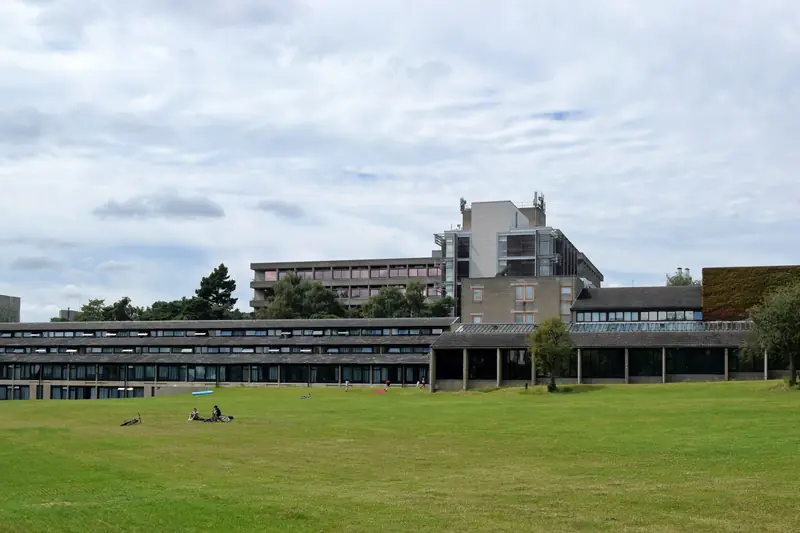
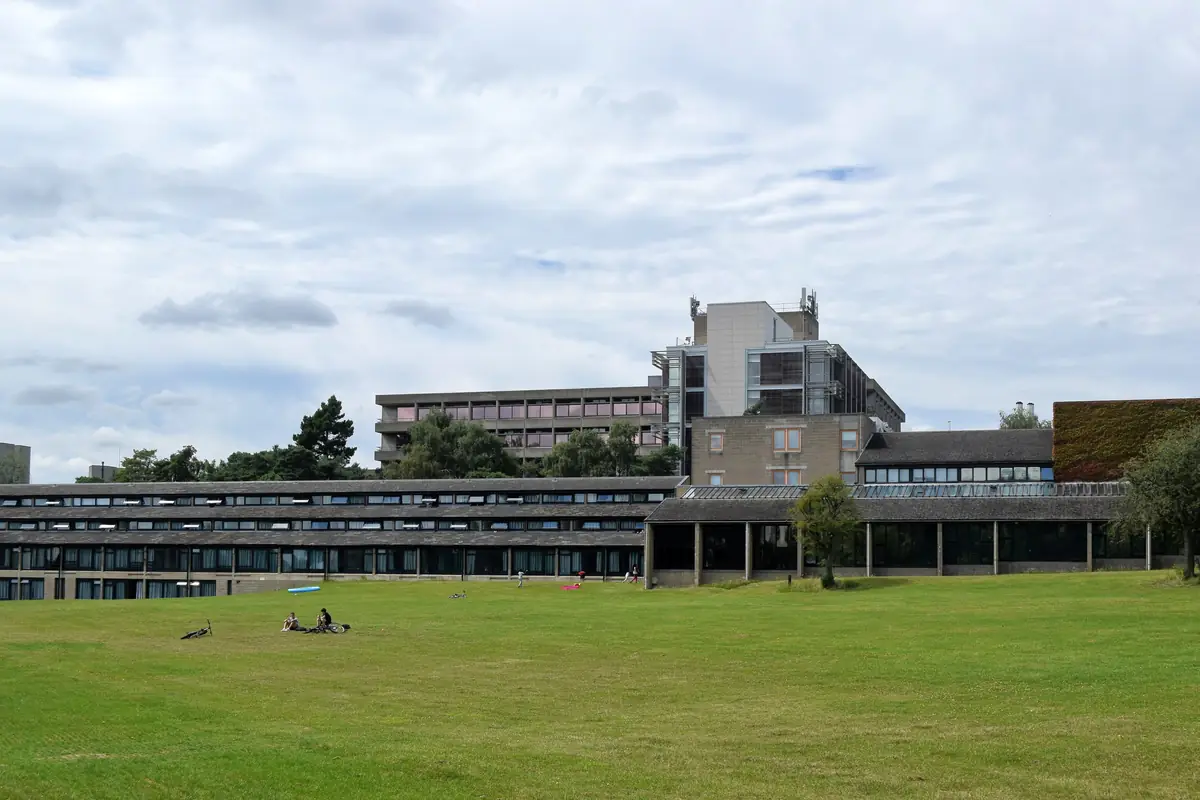
Fig. 3 Student accommodation at UEA, Norwich Photo: Bill Harrison, Wikimedia Commons (opens in a new tab), CC BY-SA 2.0 (opens in a new tab), cropped to 3:2, resized, converted to WebP.
If the balance falls after you apply. The rules also cover money spent before the decision. If your balance on the decision date is substantially below the required level, the decision maker must be satisfied that you spent it on course fees, an accommodation deposit or other costs of your course (ST 12.7). Keep the receipts.
Who does not show funds. You do not need to prove the living-cost amount if you have lived in the UK with a visa for at least 12 months on the date you apply. Nationals of a listed group of countries, under the “differential evidence requirement”, do not submit the evidence up front, but UK Visas and Immigration can still ask for it. India and Nigeria are not on that list (checked 18 Oct 2026).
What to do first. Work out your total from the gov.uk page, move the money into one account, and mark the date on which the 28 days will end. Then plan your application date inside the 31-day window, and check which side of 30 November 2026 it falls on.
Canada: proof of funds for a study permit
Canada calls its student visa a study permit. IRCC asks you to prove that you can pay, without working in Canada, for three things: tuition, living expenses, and transport to and from Canada, for you and any family members who come with you (IRCC, proof of financial support (opens in a new tab), page dated 28 August 2026, checked 18 Oct 2026).
How much. Three parts:
- your first-year tuition;
- your transport to and from Canada;
- CAD 23,448 a year for living costs for one person, for applications on or after 1 September 2026. For applications between 1 January 2025 and 31 August 2026, the amount was CAD 22,895. A family of two needs CAD 29,192, and a family of three CAD 35,888.
The living-cost amount does not include tuition or transport. You show funds for the first year. For a program longer than a year, you also tell IRCC how you will pay for the rest, for example with a multi-year scholarship or proof that your parents are employed. If you study in Quebec, Quebec sets its own amount, so read the Quebec rules instead. Our guide to study in Canada requirements shows the full table by family size.
Fig. 4 Canada living-cost funds a year, by family size Source: IRCC, checked 18 Oct 2026 (opens in a new tab)
In what form. IRCC gives examples, not a closed list. You do not need all of them, but together they must cover every cost:
- bank statements for the past 6 months, with documents that show where the money came from;
- a guaranteed investment certificate (GIC) from a Canadian financial institution;
- a student or education loan from a bank;
- a scholarship letter, or proof of a Government of Canada-funded program;
- a letter from the person or institution giving you money, with their occupation, their relationship to you, their number of dependants and the amount;
- a receipt from your school for first-year tuition and housing already paid.
For how long. The bank statements must cover the past 6 months, including the month you apply or the month before:
Fig. 5 Six months of bank statements for a study permit Source: IRCC, checked 18 Oct 2026 (opens in a new tab)
Watch the scholarship trap. A scholarship that covers only tuition still leaves your living costs and transport to prove. Show them separately.
Exchange controls. If your country uses foreign exchange controls, you must also prove that you will be allowed to take the money out.
What to do first. Check the date on which you plan to apply, because the amount depends on it. Then decide which form of proof you will use: a GIC or a loan takes time to arrange.
Australia
The Department of Home Affairs sets the amounts for the Student visa (subclass 500) (Home Affairs (opens in a new tab), updated 12 Oct 2026, checked 18 Oct 2026). You need enough money for your travel, 12 months of course fees, and 12 months of living costs: AUD 29,710 for a student, plus AUD 10,394 for a partner and AUD 4,449 for each child who comes with you. Study Australia, the Australian Government’s study site, gives the same AUD 29,710 figure. Evidence can be deposits with a financial institution, a government loan or a loan from a financial institution, or a scholarship. Instead, you can show that your parents or partner earned at least AUD 87,856 in the 12 months before you apply (AUD 102,500 if family members come with you), with official government documents such as tax assessments. The Home Affairs document checklist tells you whether to attach the evidence when you apply, but Home Affairs can ask for it later.
Fig. 6 Australia living-cost funds, 12 months, by person Source: Home Affairs, checked 18 Oct 2026 (opens in a new tab)
Use the Home Affairs page as your source for amounts and documents. Do not rely on figures from agents or forums: they can be out of date.
Common mistakes
The rules on timing and paperwork are as strict as the amount. Check your file against this list:
- Using last year’s figure. Canada changed its amount on 1 September 2026, and the UK changes its amounts on 30 November 2026. Take every figure from the official page on the day you apply.
- Forgetting the unpaid fees. In the UK, the living-cost amount is only part of the total. Unpaid course fees come on top.
- Letting the balance dip. In the UK, one day below the required amount during the 28 days breaks the period.
- Applying too late. In the UK, statements whose 28-day period ended more than 31 days before you apply no longer count.
- Forgetting transport. Canada’s rule covers travel to and from Canada.
- Statements without a source. Canada asks for documents that show where the money in your statements came from.
- Counting a tuition-only scholarship as living costs. In Canada, it still leaves living costs to prove.
- Mixing currencies without checking. The UK converts money held in another currency at the OANDA spot rate for the date you apply (Appendix Finance, FIN 1.1 (opens in a new tab)). For other countries, check the official page.
- Trusting a summary over the source. This page included. Use it to plan, then confirm on the government page.
Before you apply: a checklist
Work through this list a few weeks before your planned application date:
- Find the official page for your country in the sources below, and read it in full.
- Write down the exact amount you must show, and the date you checked it.
- Add your unpaid tuition, and for Canada your transport, if the country asks for it.
- Choose the form of proof you will use: statements, a loan, a scholarship letter or, for Canada, a GIC.
- Check how long the money must be held, and how recent the documents must be.
- Mark the key dates in a calendar: when the holding period ends, the last day you can apply, and any date on which the amount changes.
- Check that each document shows what the official page asks for.
- Keep copies of every document you submit, and receipts for anything you pay.
What the table leaves out
This guide covers one student with no dependants. Several things change the amount you must show, or the way you show it:
- Dependants. A partner or children who come with you raise the amount. Each official page sets its own rule.
- Scholarships that cover living costs. These can reduce what you must show. Check how the official page treats them.
- Exemptions. The UK relaxes the evidence rule for some nationalities and for people who have held a UK visa for 12 months, as described above. Rules for other countries are [to verify].
- Quebec. Quebec sets its own amount, so the Canadian figures above do not apply there.
Read the official page in full before you collect documents, so you do not prepare the wrong ones.
When to talk to an adviser
You can prepare most files yourself with the official page. Talk to a licensed or registered immigration adviser if:
- you rely on money from several people or several countries;
- a past visa application was refused;
- your funds come from a source that is hard to document;
- the official page does not clearly cover your situation.
In the UK, the Immigration Advice Authority regulates immigration advisers, and the Solicitors Regulation Authority (SRA) regulates solicitors. This guide is general information, not immigration or financial advice. See our disclaimer for more.
Sources
- Student Visa (opens in a new tab), U.S. Department of State. Live page blocked automated access on 18 October 2026; read from the Wayback Machine copy of 10 June 2026.
- Tuition and scholarships, international students (opens in a new tab), Bowling Green State University. Checked 18 October 2026.
- Student visa: money you need (opens in a new tab), UK Home Office. Checked 18 October 2026.
- Statement of changes to the Immigration Rules: HC 584 (opens in a new tab), UK Home Office, 3 September 2026. Paragraphs APP ST8 to ST10. Checked 18 October 2026.
- Immigration Rules Appendix Student (opens in a new tab), UK Home Office. Paragraphs ST 12.3 to ST 12.7. Page updated 8 October 2026, checked 18 October 2026.
- Study permit: proof of financial support (opens in a new tab), Immigration, Refugees and Citizenship Canada. Page dated 28 August 2026, checked 18 October 2026.
- Student visa (subclass 500) (opens in a new tab), Department of Home Affairs. Page updated 12 October 2026, checked 18 October 2026.
- Visa application process (opens in a new tab), Study Australia (Australian Government). Checked 18 October 2026.
- 8 CFR 214.2 (opens in a new tab), Electronic Code of Federal Regulations (via LII), paragraph (f)(1)(i)(B). Checked 18 October 2026.
General information, not legal, immigration or financial advice. Rules change. Confirm every requirement on the official page, and talk to a licensed adviser if your case is not simple. Disclaimer